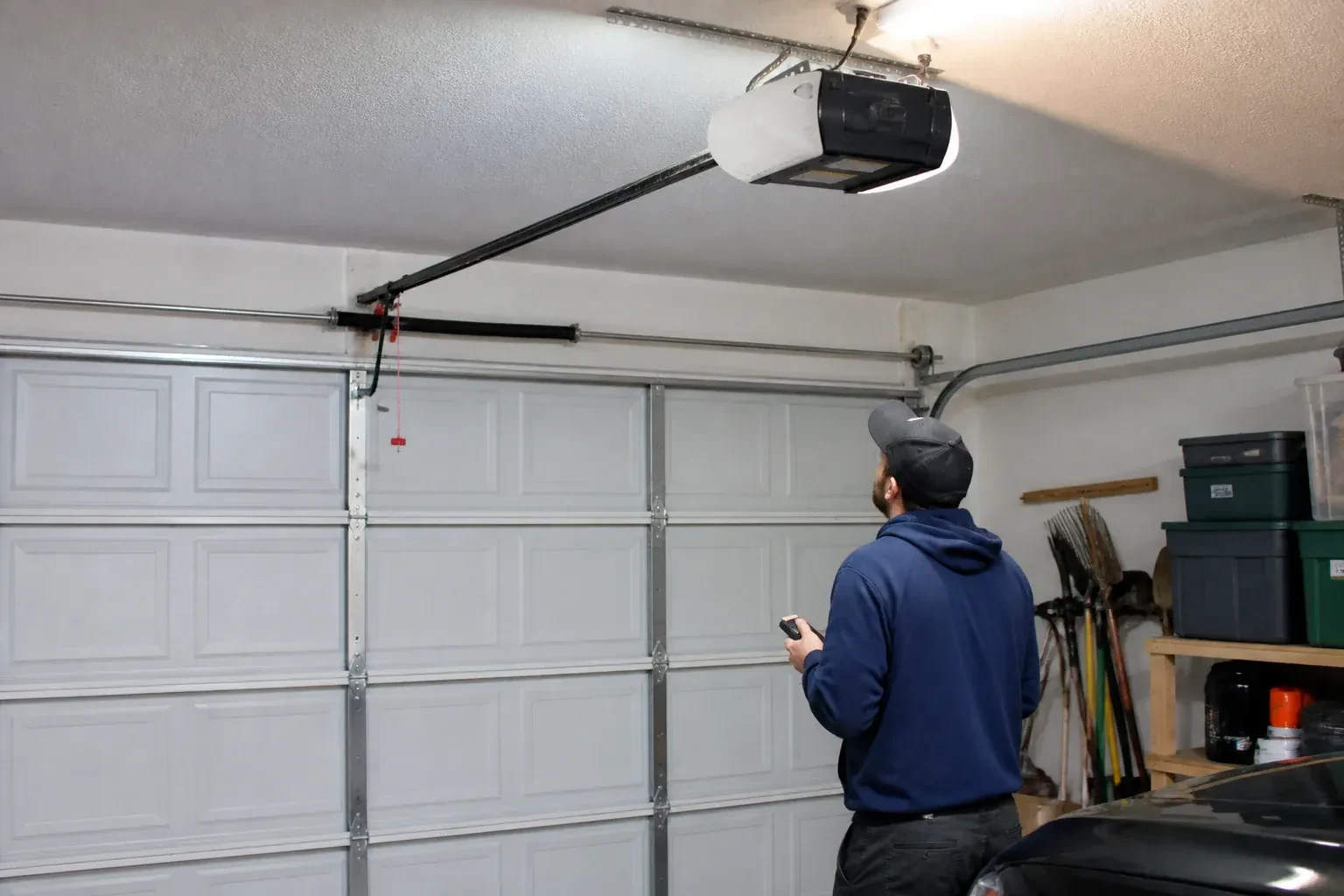
Sound familiar?Big Bay Point
- The call
- The belt looks fine from a distance, but up close the rubber has cracked across the back in dozens of places and, in one spot, you can see the steel cords showing through.
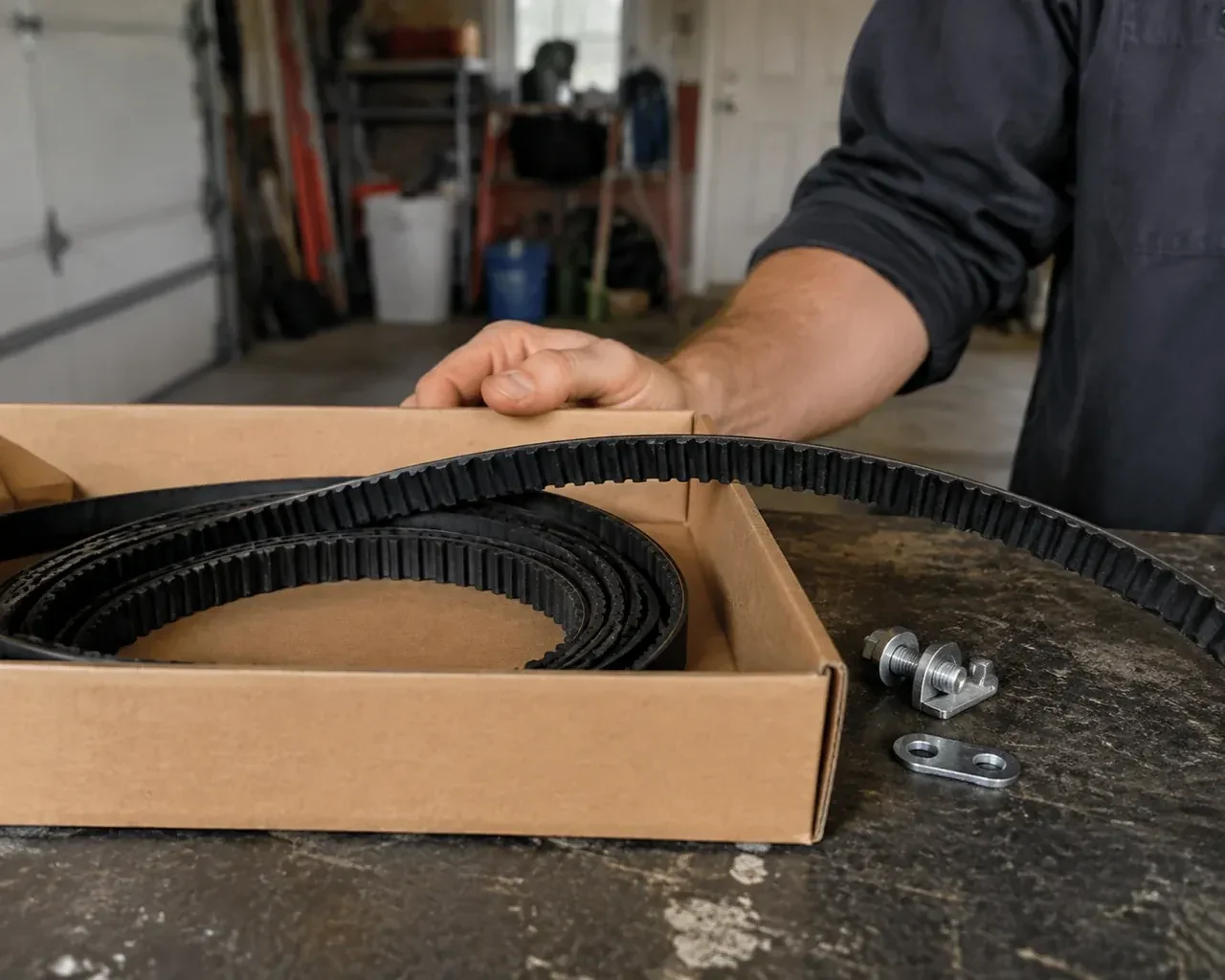
Press the remote and the motor runs its full cycle, lights on, the usual whir, but the door does not move a centimetre. Up at the trolley, the belt is hanging loose where a small plastic clip used to hold it.
Belt-drive operators use a toothed belt reinforced with steel or fibre cords, and those belts wear in recognisable ways. Age and temperature swings make the rubber brittle, so it cracks across the back and eventually shows the cords. Rubbing on a bent rail or a misaligned joint frays one edge. A door that hits something can shear a stretch of teeth or throw the belt off the idler pulley. A small clip joins the belt to the trolley and takes every start and stop. Repair fits a belt of the right length and tooth pitch for that rail, a fresh clip, and sets the tension from scratch.
Sound familiar?Big Bay Point
Belt-Drive Opener Repair · Big Bay Point
Scene 1
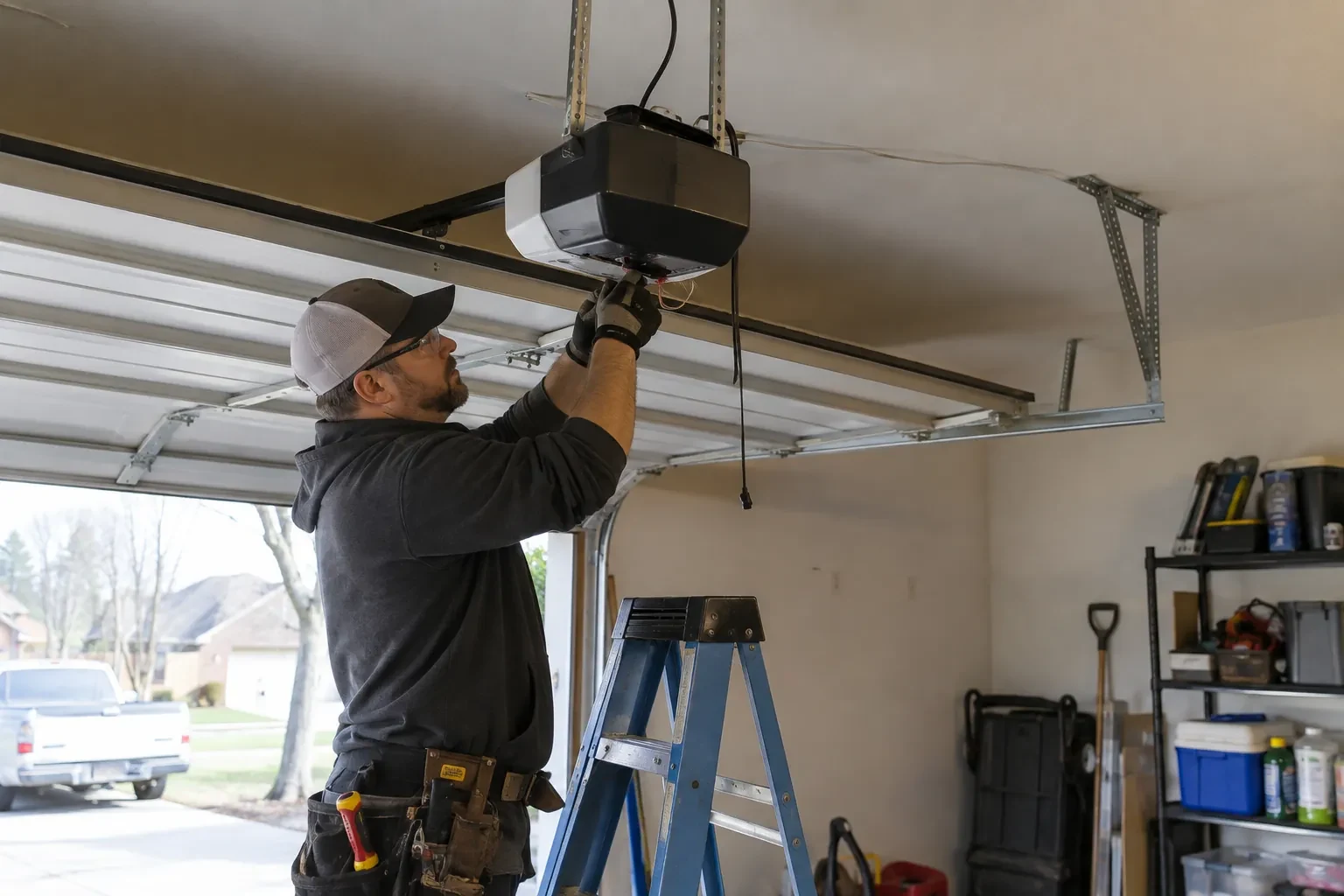
A belt frays for a reason, and the reason is usually somewhere along the rail. The technician sights the rail from the header to the motor head for a bend, a sag where a hanger has loosened, or a joint between rail sections that has stepped out of line and is catching the belt teeth each pass. Marks inside the rail show where the belt has been touching. Storage racks, a bicycle hook or a truck's roof rack lifting the rail are frequent finds. A straight, true rail lets a belt run for years without touching anything, so any of these is corrected as part of the repair rather than left to wear the new belt.
Scene 2
Any time the belt has been off the sprocket, the operator's sense of where the door is can drift from where the trolley actually sits, so this step is done before the door is reconnected. The technician lifts the belt clear of the sprocket, runs the operator until the sprocket turns to its closed position and stops on its own, then slides the trolley to the closed end of the rail and refits the belt. Motor and trolley now agree. On operators with a mechanical limit assembly, the middle contact is adjusted instead. Without this step, the door stops short at one end no matter how the travel limits are turned.
Scene 3
You now know where the release handle hangs and what happens when you use it. A pull parts the trolley so the door can be lifted by hand through a power cut; running the motor, or a second pull, reconnects it. What matters after this repair is to pull it only with the door closed. Releasing a door that is open, or one whose springs are tired, can let it fall because the spring no longer carries its weight; the release itself disconnects the trolley from the belt, so the falling door lands on its tracks and hinges, not the belt the technician just corrected. Practise it once with the door down so the first real use is calm.
What shapes the quoteInnisfil Garage Door Co.
FeesSame any hour
Cracks across the back of the rubber, a shiny glazed surface, a fuzzy or frayed edge, teeth worn flat or torn away in a stretch, and cords showing through the rubber. The clip at the trolley can also go brittle and snap. Most belts show one of these long before they fail, which is why a glance along the rail every few months catches a repair early.
It is the wheel at the header end of the rail that the belt wraps around on its return. It spins on a small bearing, and when that bearing dries or fails the pulley squeals on every cycle and can let the belt wander to one side and fray. Replacing the pulley is a modest job done with the belt slack, followed by re-tensioning.
Because the belt guides the door; the springs carry it. A door that lifts with moderate effort and stays put a metre off the floor is balanced, and a belt on that door lasts. A door that drops or drifts is loading the belt, trolley and sprocket far beyond their design, so a new belt would wear the same way. Spring work comes first in that case.
SimcoeOntario
Belt-Drive Opener Repair · Innisfil, Bell Ewart, Cedar Harbour, Cookstown, Innisfil Park, Killarney Beach, Leonards Beach, Nantyr Park, Stroud, Alcona, Alderslea, Bear Point, Belle Air Beach, Big Cedar Point, Cedar Mount, Churchill, Crescent Harbour, De Grassi Point, Glenwood Beach, Lefroy, Mooselanka Beach, Peninsular Park, Sandy Cove, Tent City
Every square is one home in a hundred.
On-site assessment
Press the remote and the motor runs its full cycle, lights on, the usual whir, but the door does not move a centimetre.
(249) 371-0023, open 24/7.
On-site assessment preferred · (249) 371-0023, open 24/7