Innisfil Garage Door Co.Bulletin 2 of 3Innisfil, Ontario
Garage Door Opener Diagnosis and Repair: how the work is done
Think of a command travelling through the system.
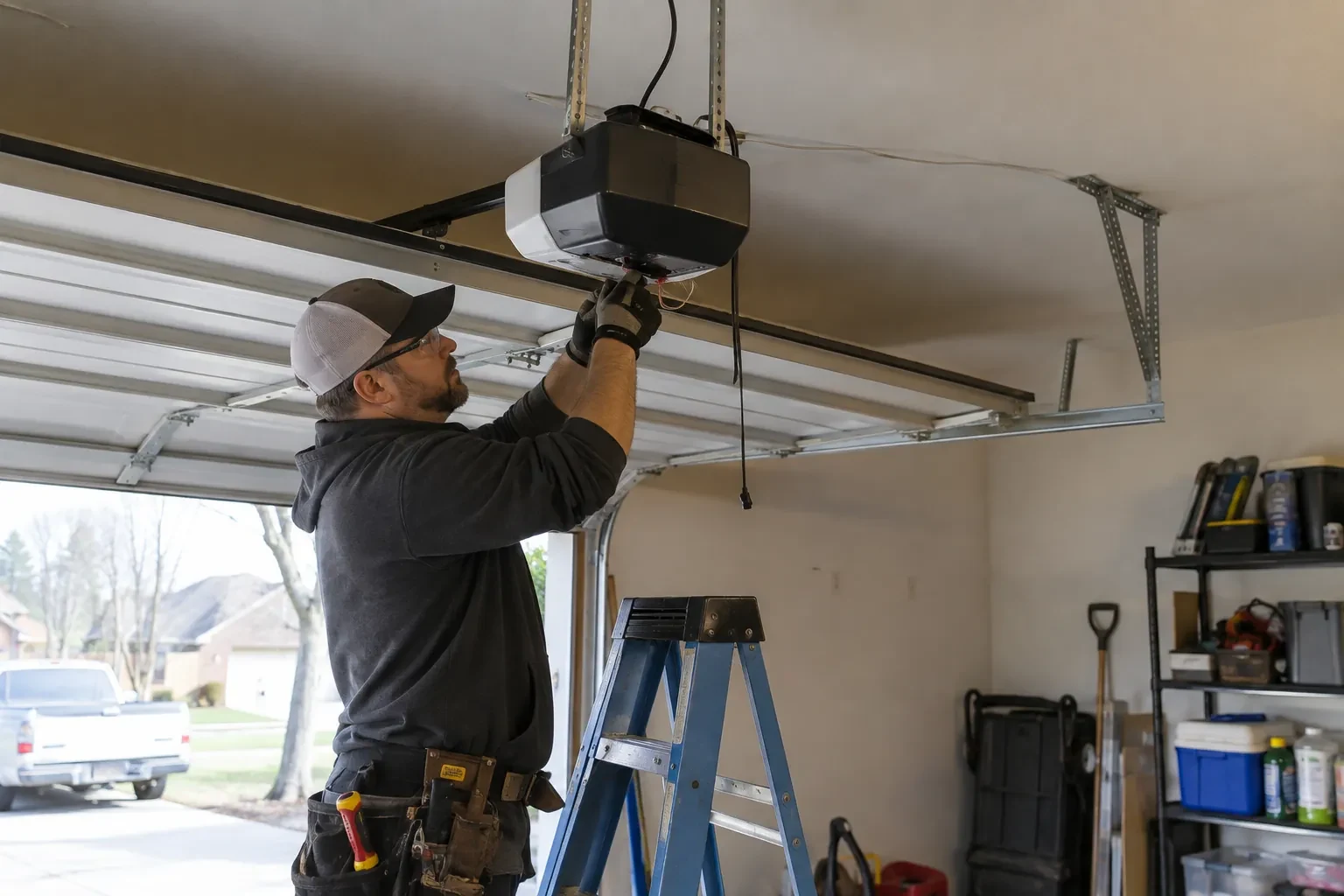
Think of a command travelling through the system. Your thumb presses a button; the radio signal reaches the receiver; the logic board decides to move; the motor turns; a gear drives a chain, belt or screw; the trolley pulls the arm; the arm moves the door. A fault at any link produces the same result from where you stand: nothing happens. Diagnosis walks that chain in order and finds the broken link, whether it is a flat remote battery at the start or a stripped gear in the middle. Working from one end keeps the fix small and the explanation simple.
Limits, force and the two safety tests
Finally the settings are checked against what the door actually does. Travel limits decide where the door stops at the top and how firmly it meets the floor; a limit set slightly long makes the door hit the slab, sense an obstruction and pop back open. Force settings decide how much resistance the opener tolerates before reversing, and these drift, or get turned up to hide a stiff door. Both are read, the door is run through full cycles, and the contact reversal test with a 2x4 and the beam-interruption test are performed. Any setting that only passes because force is cranked high is treated as a symptom.
When replacement is the honest answer
Sometimes the diagnosis points past repair. A head unit from before photo eyes were standard, a board no longer manufactured, a motor burnt out in a housing whose gear train is also worn, or a chain-drive unit that has already had two gear kits are all cases where replacing the opener serves you better than another patch. The technician sets out what was found, why repair is a poor fit, and what a modern unit offers: a belt or direct drive for quiet, battery backup for outages, and the safety features the standard requires. The choice remains yours, and the door is left safe in the meantime.
The monthly test you can do yourself
You leave knowing a short check that catches most opener trouble early. Once a month, with the door open, lay a piece of 2x4 flat on the floor under the middle of the door and press close; the door should touch it and go straight back up. Then close the door again and pass a broom handle through the sensor beam near the floor; the door should stop and reverse. Watch the sensor lights stay steady. If either test fails, stop using the opener and book a visit. These are the same tests the technician just performed, and they are all the standard asks of a working unit.